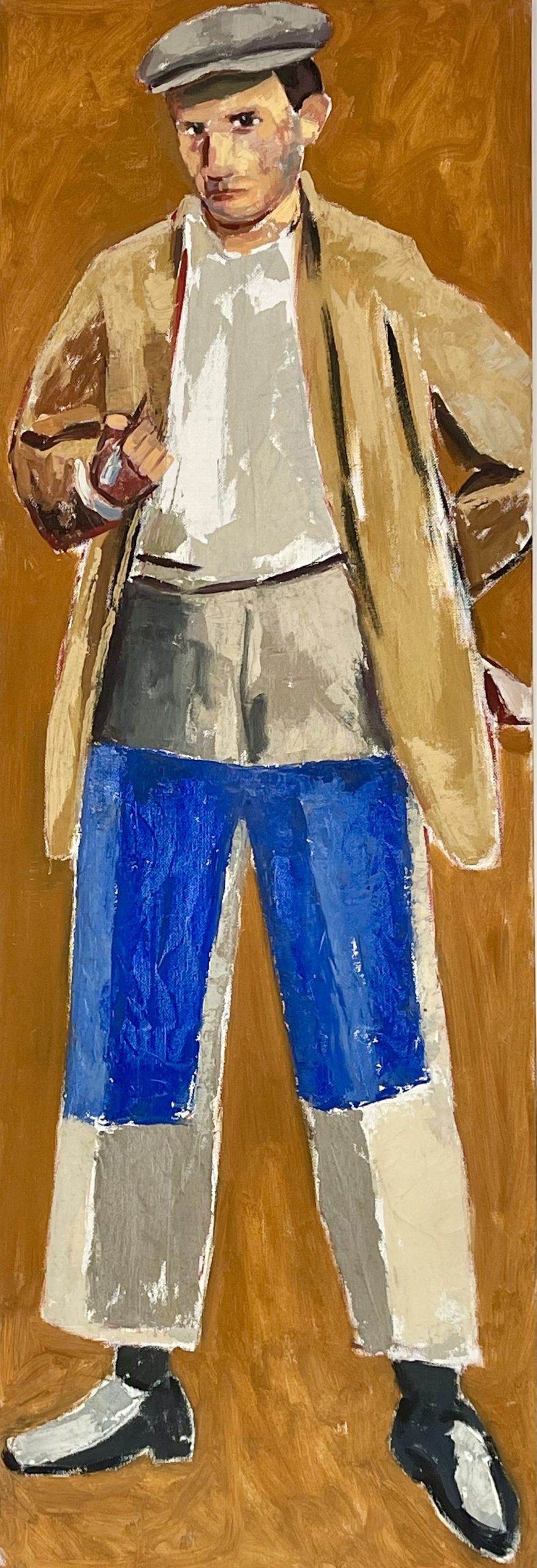
Pablo Ruiz Picasso (25 October 1881 – 8 April 1973) was a Spanish painter, sculptor, printmaker, ceramicist, and theatre designer who spent most of his adult life in France. One of the most influential artists of the 20th century, he is known for co-founding the Cubist movement, the invention of constructed sculpture, the co-invention of collage, and for the wide variety of styles that he helped develop and explore. Among his most famous works are the proto-Cubist Les Demoiselles d’Avignon (1907) and the anti-war painting Guernica (1937), a dramatic portrayal of the bombing of Guernica by German and Italian air forces during the Spanish Civil War.
Picasso demonstrated extraordinary artistic talent in his early years, painting in a naturalistic manner through his childhood and adolescence. During the first decade of the 20th century, his style changed as he experimented with different theories, techniques, and ideas. After 1906, the Fauvist work of the older artist Henri Matisse motivated Picasso to explore more radical styles, beginning a fruitful rivalry between the two artists, who subsequently were often paired by critics as the leaders of modern art.
Picasso’s output, especially in his early career, is often periodized. While the names of many of his later periods are debated, the most commonly accepted periods in his work are the Blue Period (1901–1904), the Rose Period (1904–1906), the African-influenced Period (1907–1909), Analytic Cubism (1909–1912), and Synthetic Cubism (1912–1919), also referred to as the Crystal period. Much of Picasso’s work of the late 1910s and early 1920s is in a neoclassical style, and his work in the mid-1920s often has characteristics of Surrealism. His later work often combines elements of his earlier styles.
Exceptionally prolific throughout the course of his long life, Picasso achieved universal renown and immense fortune for his revolutionary artistic accomplishments, and became one of the best-known figures in 20th-century art.
🇵🇹 Tempera a ovo sobre tela.
Pablo Ruiz Picasso (25 de outubro de 1881 – 8 de abril de 1973) foi um pintor, escultor, gravador, ceramista e designer de teatro espanhol que passou a maior parte de sua vida adulta na França. Um dos artistas mais influentes do século 20, ele é conhecido por cofundar o movimento cubista, a invenção da escultura construída, a co-invenção da colagem, e pela grande variedade de estilos que ele ajudou a desenvolver e explorar. Entre suas obras mais famosas estão o proto-cubista Les Demoiselles d’Avignon (1907) e a pintura anti-guerra Guernica (1937), um retrato dramático do bombardeamento de Guernica pelas forças aéreas alemãs e italianas durante a Guerra Civil Espanhola.
Picasso demonstrou um talento artístico extraordinário nos seus primeiros anos, pintando de uma forma naturalista durante a sua infância e adolescência. Durante a primeira década do século 20, seu estilo mudou à medida que experimentava diferentes teorias, técnicas e ideias. Depois de 1906, o trabalho fauvista do artista mais velho Henri Matisse motivou Picasso a explorar estilos mais radicais, dando início a uma rivalidade frutífera entre os dois artistas, que posteriormente foram frequentemente emparelhados pela crítica como o líder das artes modernas.
A produção de Picasso, especialmente no início de sua carreira, é frequentemente periodizada. Embora os nomes de muitos de seus períodos posteriores sejam debatidos, os períodos mais comumente aceitos em seu trabalho são o Período Azul (1901-1904), o Período Rosa (1904-1906), o Período de influência africana (1907-1909), o Cubismo Analítico (1909-1912) e o Cubismo Sintético (1912-1919), também conhecido como Período Cristal. Grande parte da obra de Picasso do final da década de 1910 e início da década de 1920 é em estilo neoclássico, e seu trabalho em meados da década de 1920 muitas vezes tem características do surrealismo. Seus trabalhos posteriores muitas vezes combinam elementos de seus estilos anteriores.
Excepcionalmente prolífico ao longo de sua longa vida, Picasso alcançou renome universal e imensa fortuna por suas realizações artísticas revolucionárias, e se tornou uma das figuras mais conhecidas da arte do século 20.